

How collection, extraction, personalization, and connected workflows form the foundation for the next evolution of wealth and equity technology.
A capital statement arrives in a fund portal. A financing agreement lands in an inbox. An investment team prepares its quarterly report while a founder works through the ownership changes from a new round. Before either team can move forward, someone has to turn documents into records, connect those records to the right entities, and check what changed.
That work sits underneath nearly every useful experience in wealth and equity technology. A portfolio view depends on the sum total of the investment transactions. A cap table depends on the terms and events behind its ownership records. An AI assistant needs that context to help someone take the next step.
At Mantle, we think of this foundation as a Wealth Operating System: the underlying system that brings information in, preserves its financial meaning, applies the client’s context, and makes it useful across workflows.
Developing the next evolution of wealth and equity technology comes from connecting those capabilities. As software takes on more of the work of interpreting documents and preparing actions, the quality of the system underneath becomes decisive. Its records, checks, and accumulated context determine what that software can responsibly do.
The system that unlocks new experiences
Mantle’s Wealth Operating System has four connected responsibilities: collection, extraction, personalization, and workflows. Together, they describe the path from incoming structured and unstructured information to data an investment or equity team can use.
Collection establishes what information is available and what is missing. Extraction turns source material into structured records while retaining context. Personalization applies the team’s reporting frameworks. Workflows put that information to use in reporting, review, and preparation for the next action.
Traceability runs through these responsibilities. Teams need to understand where a value came from, how it was interpreted, and what still needs judgment. The operating system must also retain useful corrections so the next reporting cycle can benefit from the last one.
Mantle’s document and reporting workflows provide a concrete view into how this foundation works. The same need to connect documents, context, and action also shapes the opportunity in equity management.
Collection: establish the context for everything that follows
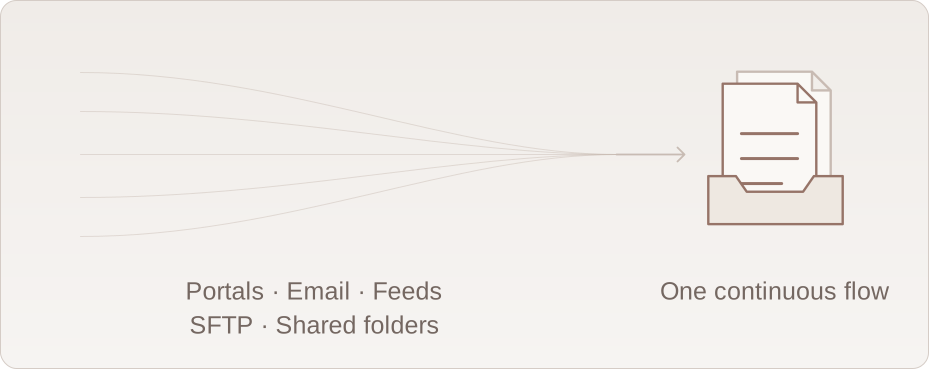
Recording an investment record begins with a coverage question: which documents have arrived, and which are still outstanding?
Mantle can collect all corporate documents, classifies them by type, and maps them to expected records. That gives teams a way to assess the information available for a reporting period and follow up on gaps. A portfolio report can only be understood properly when the team also knows what it is waiting on.
The document type then determines the work ahead. A capital call carries a transaction and a deadline. A capital statement describes an account over a period. An investor report contains company updates and commentary. Each needs an interpretation suited to its purpose.
Context matters within the document, too. One table can show both the investor’s allocation and the entire fund, with columns for the quarter, the year, and the period since inception. For example, Mantle’s capital statement extraction accounts for the relevant investor, fund, and reporting period for each document.
Getting those relationships right gives the later workflow something meaningful to work with: an amount tied to an investment and a period, with its source available for inspection.
Extraction: build records that preserve financial meaning
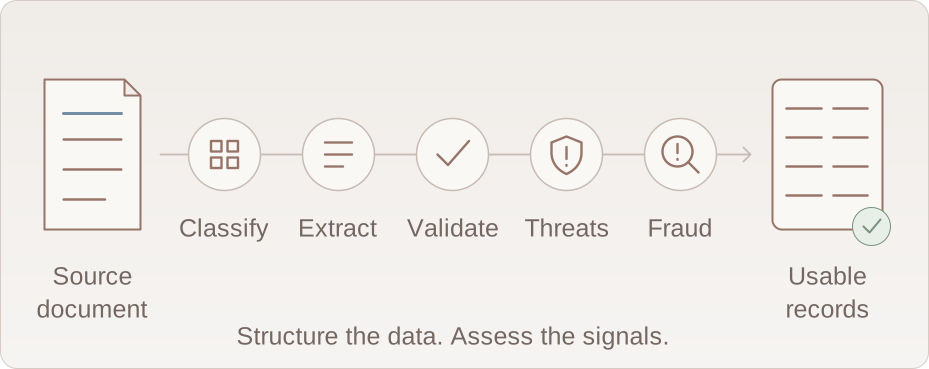
The operating system needs enough accurate detail to support several uses of the same information. A total may be sufficient for one view, while a review or explanation requires the individual verified amounts behind it.
Mantle separates extraction from categorization to ensure the highest amount of accuracy possible. As seen in AWE-bench, a proper solution has to go above and beyond current model capabilities. Categorization maps those rows into reporting fields. The system then compares the categorized output with the extracted rows, preserving matched values and excluding additional rows introduced during categorization. This gives each stage a defined responsibility and an intermediate result to check.
Financial checks add another layer. Consider a hypothetical statement for one investor, one quarter, and one currency, with no other activity:
| Item | Amount in USD | Amount in USD |
|---|---|---|
| Beginning balance | $1,000,000 | |
| Contributions | $100,000 | |
| Distributions | $−40,000 | |
| Fees and expenses | $−10,000 | |
| Unrealized gain | $50,000 | |
| Ending balance | $1,100,000 |
The activity supports the ending balance. An extracted ending balance of $1,105,000 would create a $5,000 difference to investigate. But classifying the $50,000 unrealized gain as a contribution would leave the arithmetic intact while changing the financial meaning.
That distinction explains why validation and review belong inside the system. Mantle’s checks test financial relationships and surface issues such as missing or inconsistent reporting dates. Mantle’s review interface pairs extracted items with normalized fields and lets reviewers inspect the corresponding text in the PDF. Checks depend on the available data; teams can investigate both the amount and its interpretation.
This is what we mean by high fidelity: preserving the detail and evidence needed to explain a record as it moves into other uses. That foundation becomes more valuable as more workflows depend on it.
Personalization: carry the team’s judgment forward
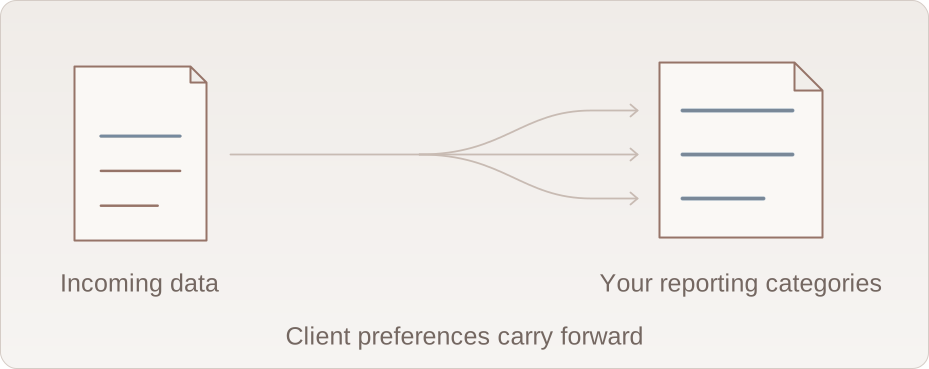
Turning documents into consistent records also requires understanding how a particular team uses them. The source description and the client’s reporting category can differ, and recurring decisions should remain available across reporting periods.
Mantle stores filing preferences with organization, fund or security, and document-type context. This means that the underlying operating system is learning and growing with your organization over time.
For example, a team may decide that a recurring “Administrative costs” row belongs under partnership expenses. Mantle will learn from this preference or interaction and apply that decision to the same scenario in the next statement. The amount still comes from the new document.
This gives the operating system a practical form of memory. Review produces both a corrected record and a reusable decision. New descriptions or changed circumstances can still require judgment, while familiar cases can benefit from work already done.
Over time, that continuity is central to the value of the system. A team can build on its accumulated understanding of an investment and its reporting requirements.
Workflows: make the foundation useful across the business
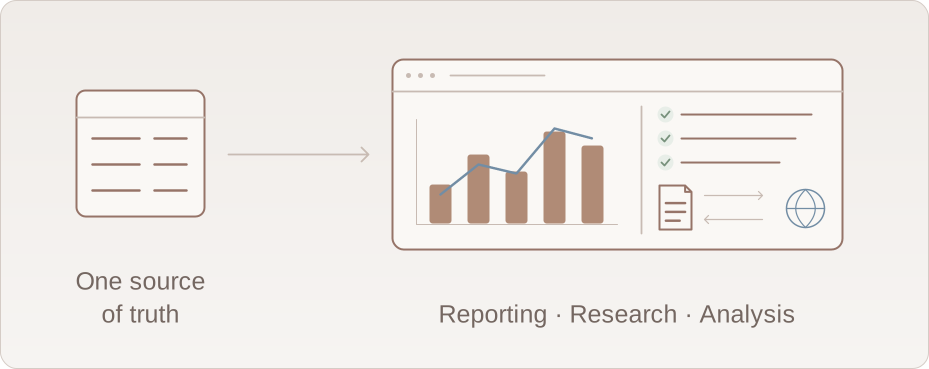
The value of structured information appears in the work it supports. Mantle Portal provides investment positions, performance, activity, allocation, and look-through reporting, and more. Those views answer different questions about commitments, movements in value, and underlying holdings using the financial context behind the portfolio.
Narrative information needs its own path. An investor report may explain a company’s progress or the manager’s outlook. Mantle’s holding summary implementation supplies holding context, supports summaries and original language extracts, and retains source references with the resulting content. Those references let a reader investigate the scope and support for a statement.
Equity management shows another application of connecting source information to a working record. Mantle Equity uses AI to help turn financing and ownership documents into cap table records, alongside tools for managing securities and modeling rounds and dilution.
Mantle Clerk makes the connection to action tangible. Its published on-boarding example starts with an offer letter and uses the grant information to prepare a draft for a board action. The document becomes an input to a workflow with a concrete next step.
These experiences illustrate the broader operating system principle: useful automation connects source material, domain context, structured records, and the people responsible for the result. Each domain needs its own financial logic and review process.
A foundation for the next evolution of wealth and equity technology
We believe the next generation of wealth and equity software will take on more of the work between receiving information and acting on it. That could mean preparing a review around the changes that matter, explaining a movement in a portfolio, or assembling a proposed equity action from supporting documents.
Each step requires a dependable foundation. An assistant explaining a balance needs the underlying transactions and their categories. A workflow preparing an equity action needs the relevant terms and ownership context. Both need to make missing information and unresolved questions visible to the person responsible for the decision.
This is the direction behind Mantle’s Wealth Operating System. Collection supplies coverage. Extraction preserves meaning. Personalization carries judgment forward. Workflows turn that accumulated context into useful work.
As those capabilities develop, our aim is for teams to spend more of their attention evaluating changes and making decisions, with the system carrying more of the preparation. The foundation beneath Mantle is what makes that progression possible: information that remains connected to its evidence, shaped by the team’s context, and ready for the next task.
Book a Mantle demo to see the Wealth Operating System at work.